Conservation · 7 min read
The Real Cost of Mass Tourism and Park Airstrips on Tanzania's Wildlife
I haven't lived in Tanzania long enough to tell you how the land has changed over decades. What I can tell you is what a single overcrowded sighting looks like from inside it — and what it costs the animal, the parks, and the people trying to do this work honestly.
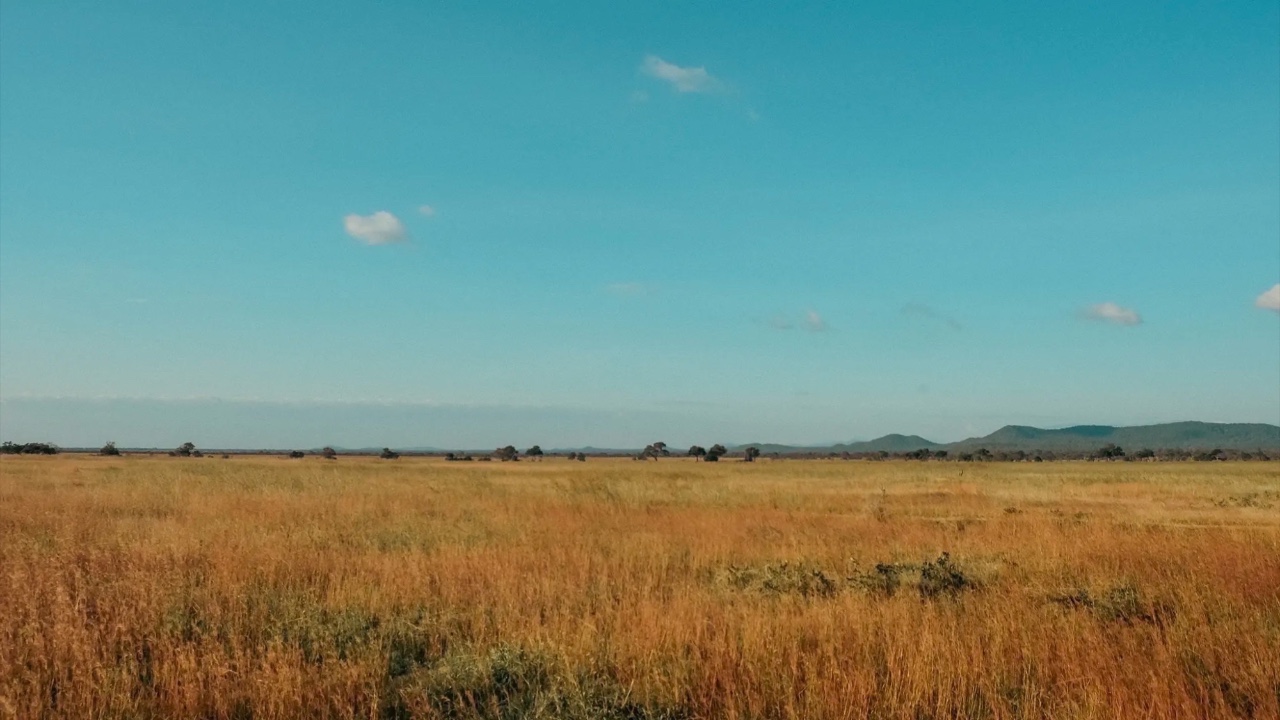
I’m not going to pretend I’ve watched this landscape change over twenty years. I don’t have the decades in the field that would let me tell you a migratory corridor has recovered, a population has rebounded, or a drought pattern has shifted. I’d rather tell you plainly what I have seen in the time I’ve actually spent here than borrow a longer story that isn't mine.
What I have seen, clearly and repeatedly, is what mass tourism and budget one-day safaris do to a park, to the community around it, and to the people who are trying to run this industry with integrity. That is a smaller claim than watching an entire ecosystem evolve, but it is one I can stand behind completely.
When a Safari Becomes a Cruise Ship
A one-day safari often looks remarkably like a massive cruise ship pulling into a small port. The plane lands, the airstrip doors open, and the rush begins. One after another, safari vehicles splash into the park in a long convoy, all driving at the speed limit toward the exact same GPS coordinates: the lions.
To understand why this happens, you have to look at the pressure on the ground. Over 95% of these day-trippers fly in from Zanzibar on a tight itinerary, arriving around 11:00 AM with one non-negotiable expectation: they want to see a big cat.
It is an understandable wish, but it reflects a fundamental misunderstanding of what a safari actually is. Somewhere along the line, the idea of stepping into an unpredictable, wild ecosystem was replaced by the expectation of a guaranteed sightseeing tour. When a guest says, "I paid for a safari, I want to see a lion," they are treating the savannah like a theme park with scheduled performances.
Yet what is most overlooked is how little they paid for what is being promised. A typical day-trip safari from Zanzibar sells for around $350 per person. That single price covers round-trip flights, transfers, park entrance fees, a guide, food, water, and the game drive itself. Once you subtract the massive logistical costs, the actual time spent looking for wildlife comes down to roughly four hours before the plane heads back to the coast.
When you pack high expectations into a compressed four-hour window, the experience breaks down. Guides working these trips have explained the brutal reality: if a client returns to Zanzibar without seeing a headline animal, the tour operator may temporarily—or permanently—stop giving that guide work.
So imagine thirty or forty vehicles being filled by tourists at the same time, all under intense pressure to deliver. An elephant standing in the road? We’ll see it later.
A herd of impalas in the morning light? Later. A giraffe crossing the track? Later.
The lion is the priority—not because the driver doesn't appreciate the ecosystem, but because the client’s expectations and a ticking clock demand it.
What a Rushed Sighting Actually Looks Like
I’ve sat at sightings where twelve, fifteen, sometimes twenty vehicles converge on a single resting leopard within minutes of a radio call. Most are on those tight one-day itineraries that give a driver perhaps twenty minutes at each stop before the group has to move on to justify the day's ticket.
The animal, of course, has no twenty-minute limit. It simply sits there with fifteen diesel engines idling and dozens of cameras pointed at it for as long as it takes the crowd to feel satisfied enough to leave.
You can watch an animal's behavior change in real time under that pressure—ears pinned back, restless shifting, or a retreat into thick cover it wouldn't otherwise have taken at that hour. None of that shows up in anyone's photos, because everyone leaves as soon as they get the shot. The damage from this model isn't just ecological; it is behavioral, cumulative, and driven entirely by an itinerary structure rather than individual malice.
The Real Cost to Communities
The budget one-day model is marketed as an affordable way to see Africa, which sounds like a virtue until you look at where the margins are actually cut. It is rarely the operator’s profit.
Instead, it is the guide’s wage, spread across more clients per day and less time invested in knowing any one place well. It is the community conservancy fee, quietly minimized or routed around. It is the local businesses—camps, trackers, craftspeople—that depend on visitors staying long enough, and spending enough, for money to filter into the community living alongside the wildlife rather than flying back to a coastal resort the same evening.
I’ve spoken directly with guides who told me they would far rather earn less running fewer, longer, better trips than keep doing four rushed, chaotic drives a week for an operator undercutting everyone else’s rates. That isn't an abstract economic theory; it is a human cost expressed by the people whose livelihoods depend on this land.
The Pressure on Ethical Operators
This is the part I feel most strongly about: operators and guides who genuinely believe in a slower, more respectful model are constantly undercut by a race-to-the-bottom pricing structure that actively rewards bad behavior.
A camp that limits vehicle numbers at a sighting, or a guide who chooses to skip a crowded spot entirely to give an animal space, is competing against businesses with none of those constraints and a cheaper price tag to show for it. Ethical tourism isn't losing to bad intentions; it is losing to a commercial model that makes patience financially irrational—unless travelers actively choose to support something different.
Where I Stand
I don't have a tidy, silver-bullet solution to offer, and I am suspicious of anyone in this industry who claims they do.
What I can control is small: how I run my own trips, who I choose to work with on the ground, and which sightings I am willing to walk away from rather than add another idling engine to the crowd. I would rather show a guest one leopard, at a respectful distance, for forty unhurried minutes, than five leopards crowded by twenty vehicles for two minutes each. That choice doesn't undo what mass tourism is doing to these parks, but it refuses to contribute to it.
I also believe in continuous education. The more travelers understand what a safari actually entails—and what a $350 four-hour day trip costs the environment and local communities—the more likely they are to seek out ethical, sustainable options when planning their journey.
That is the most honest position I can take on conservation right now: not a grand, fifty-year perspective I haven't earned, but a clear-eyed view of what I see every week, and the daily decisions I make because of it.
The Newsletter
Field notes, quietly delivered
A slow letter — new stories, journal entries and safari dates, a few times a year. No noise.